
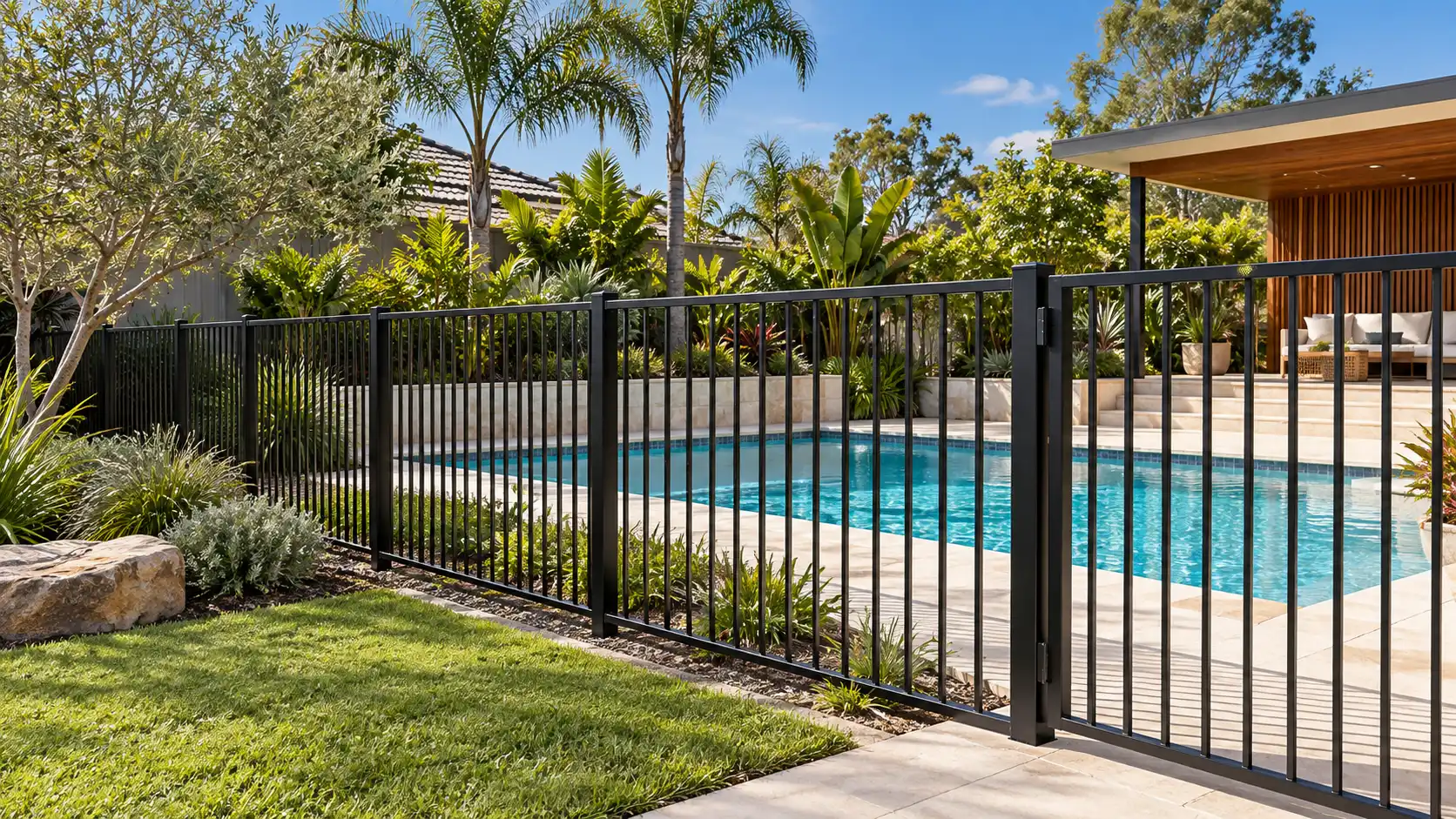
Aluminium pool fencing is one of the most practical ways to create a durable barrier without making the project visually heavy or difficult to maintain. Its slim vertical lines work with many Sydney homes, from established brick properties to contemporary builds, and powder-coated finishes can connect the fence with windows, gates and other outdoor metalwork.
It is sometimes described as the “simple” option, but there is plenty to decide. Panel style, post spacing, colour, gate position, ground levels and the transition to other boundaries all influence the final result. A well-designed aluminium fence can look deliberate and architectural; a poorly planned one can expose every change in level and awkward corner. This guide explains how to get the practical advantages while keeping the design considered.
Why aluminium remains popular
Aluminium is light in weight, resistant to rust and well suited to outdoor fabrication. A quality powder-coated finish provides colour and surface protection without the regular repainting associated with many traditional materials. Routine washing is still important, particularly close to the coast, but the overall maintenance burden is modest.
The material is also flexible from a design perspective. Standard vertical-picket panels create an open boundary with clear airflow. Slatted and privacy-oriented styles can screen selected areas, subject to the layout and the requirements that apply to the pool barrier. Gates, side returns and adjoining boundary fences can often be detailed in a consistent language.
Cost is another reason homeowners consider aluminium. It is generally more economical than glass, especially across long runs. That can free budget for paving, planting or a better gate arrangement. Value, however, depends on the full scope: access, footings, custom panels and level changes can be as important as the number of metres.
Understanding panel styles
The familiar pool fence panel uses evenly spaced vertical pickets between horizontal rails. This style is visually open and easy to coordinate with many homes. The spacing, rail profile and overall proportions vary between systems, so compare actual samples rather than assuming every black panel will look the same.
Flat-top panels produce a clean horizontal edge. Other decorative profiles may suit a period-inspired garden, but additional shapes can make the fence more visually prominent. In a modern landscape, simple repetition usually creates the calmest result. Let planting, stone and water carry the decorative interest.
Slatted or screening-style aluminium can be useful where privacy matters, although the design must still suit its location and the requirements for the barrier. These panels feel more solid and cast stronger shadows. They work best when used intentionally, perhaps beside a neighbour-facing edge, rather than introduced randomly into an otherwise open fence.
Colour changes how the fence is perceived
Black is common because it tends to recede against planting and shadows. From inside the house, the eye often looks through dark vertical lines rather than stopping at them. Charcoal can offer a slightly softer connection with modern cladding and window frames, while lighter colours may suit pale coastal architecture or a traditional palette.
Match does not always mean identical. A black fence can work with bronze windows if both sit within the overall material scheme. Conversely, choosing a colour solely because it matches one small feature may make the fence feel disconnected from the larger garden. Look at the proposed finish beside paving, walls and foliage under outdoor light.
Powder-coat appearance includes sheen as well as colour. A low-sheen or satin finish often feels quieter than a glossy surface and shows reflections differently. Ask which finish is included and whether matching gates, posts and custom pieces will come from the same colour specification.
Planning for sloping and stepped sites
Many Sydney blocks fall away from the street or change level around retaining walls. Aluminium can respond to those conditions in several ways. Panels may be stepped so each section remains level, or a suitable system may follow a rake. The right approach depends on the amount of fall, the panel design and the required clearances.
Stepping creates a series of horizontal lines and small vertical changes. These can look orderly when the steps align with posts, walls or changes in paving. Poorly placed steps can feel busy, especially when they occur near a gate. Measure the whole run before deciding where each transition should happen.
A raked line follows the slope more continuously. It can feel natural on a long boundary but requires a system and fabrication method that suit the angle. Custom work may be needed where standard panels cannot achieve the required geometry. A site measure allows the installer to compare appearance, cost and buildability before materials are ordered.
Posts and footings do the real work
The slim appearance of an aluminium fence depends on secure support. Posts may be fixed to a suitable structural surface or set into prepared footings, depending on the site and the system. Soil, paving, retaining walls and drainage all affect the method. A decorative paver alone may not provide the structure a post needs.
Post spacing should create a consistent rhythm while accommodating corners and the gate. Very short infill sections can look awkward and cost more to fabricate. Shifting a corner or gate by a small amount may allow more balanced panels and simpler fixing points.
Where the fence meets a wall or another material, the junction deserves careful design. Gaps, brackets and changes in height should be resolved before installation. The final few hundred millimetres of a run can be the most complicated part because the installer has less room to adjust panel lengths and post positions.
Designing the gate for everyday reliability
The gate is used more than any other component. Its frame, hinges, latch and support posts need to work as a coordinated system. The posts around it may require additional footing or a different detail because they carry moving loads rather than only supporting a fixed panel.
Position the gate on the natural route to the pool. It should not open into a step, force people into planting or compete with outdoor furniture. Think about someone approaching with towels or supervising children: the entry should be visible and intuitive, with enough space to operate comfortably.
Self-closing and latching action should be checked after installation and during routine maintenance. Ground movement, impact or repeated heavy use can affect alignment. If performance changes, have the gate adjusted rather than tying it back or modifying the hardware. The gate is not an accessory; it is central to how the barrier functions.
Using aluminium with glass or existing boundaries
A mixed-material fence can be a smart allocation of budget. Glass might preserve the main view from the living room, while aluminium handles a long side boundary or a less visible service area. The change between materials should occur at a logical point such as a corner, wall or change in paving.
Colour can help the transition. Black aluminium posts may connect visually with dark glass hardware, allowing two systems to feel related. Heights and top lines should also be considered together. A sudden change without an architectural reason tends to draw attention to the join.
Existing boundary fences, walls and gates need to be assessed rather than assumed suitable. Condition, height, openings, climbable features and adjacent ground levels may affect the overall barrier. Your installer can explain what the proposed work addresses, while the relevant council or a suitably qualified certifier can confirm the requirements for the property.
Maintenance in Sydney conditions
Powder-coated aluminium is low-maintenance, not maintenance-free. Wash the fence periodically with fresh water and a mild cleaning method suitable for the finish. This removes salt, dust, pool chemicals and organic material before they build up. Coastal and harbour-side locations generally benefit from more frequent rinsing.
Avoid abrasive pads, harsh solvents and aggressive chemicals. They can change the sheen or damage the protective surface. Clean both the easy-to-see faces and the areas around rails, hinges and latches where residue can collect. Rinse thoroughly so cleaning products are not left in joints.
Inspect for chips or impacts, especially near gates, lawn equipment and frequently used paths. Small areas of damage are easier to address before they become larger. Keep soil, mulch and constantly wet vegetation from sitting against the lower rails and posts, and ensure irrigation is not spraying the same section every day.
What influences the quotation?
Length is the most visible measure, but it does not tell the whole story. Gates, corners, stepped panels, raked fabrication, custom returns and difficult access all add time and components. Removing an old fence, drilling through dense paving or forming new footings may also be part of the scope.
Ask whether the quotation includes disposal, custom panels, gate hardware, surface preparation and final adjustment. Confirm the proposed panel style, colour and finish. If two quotes differ significantly, compare these details before concluding that one installer is simply more expensive.
A site visit allows accurate measurements and identifies practical issues that are invisible in photographs. Side access may limit panel length. Underground services or drainage may affect post locations. A retaining wall may need a different approach. Identifying these matters early helps the work proceed smoothly and reduces last-minute changes.
Common design mistakes to avoid
One mistake is placing the gate where it looks symmetrical on a plan but feels inconvenient in use. Another is ignoring mature plant size, then discovering that branches or pots crowd the barrier. A third is letting panel steps occur randomly instead of aligning them with site levels.
Choosing colour from a small indoor sample can also mislead. Review it outside, beside the actual materials, and remember that strong sun changes perceived sheen. Finally, do not treat the fence as the last isolated trade. Paving levels, wall caps, drains and landscaping all affect how cleanly it can be installed.
Good coordination produces an aluminium fence that feels like part of the landscape rather than a product placed on top of it. The posts align, the gate meets the path, and the top line responds calmly to the ground.
Is aluminium the right choice?
Aluminium is particularly strong when durability, cost control and adaptability are priorities. It handles long runs efficiently, offers a wide choice of finishes and can respond to sloping ground. It also suits households that want a straightforward cleaning routine rather than regular glass care.
Glass may be preferable where an uninterrupted view is the main goal. Privacy-style panels may be useful where screening matters. Many projects use a combination. The right answer comes from looking at the important views, the ground and the way people move through the yard.
Learn more about aluminium pool fencing or book an on-site consultation with Pool Fencing Sydney. We can measure the line, compare panel and gate options, assess levels and access, and prepare a practical recommendation for your property.