
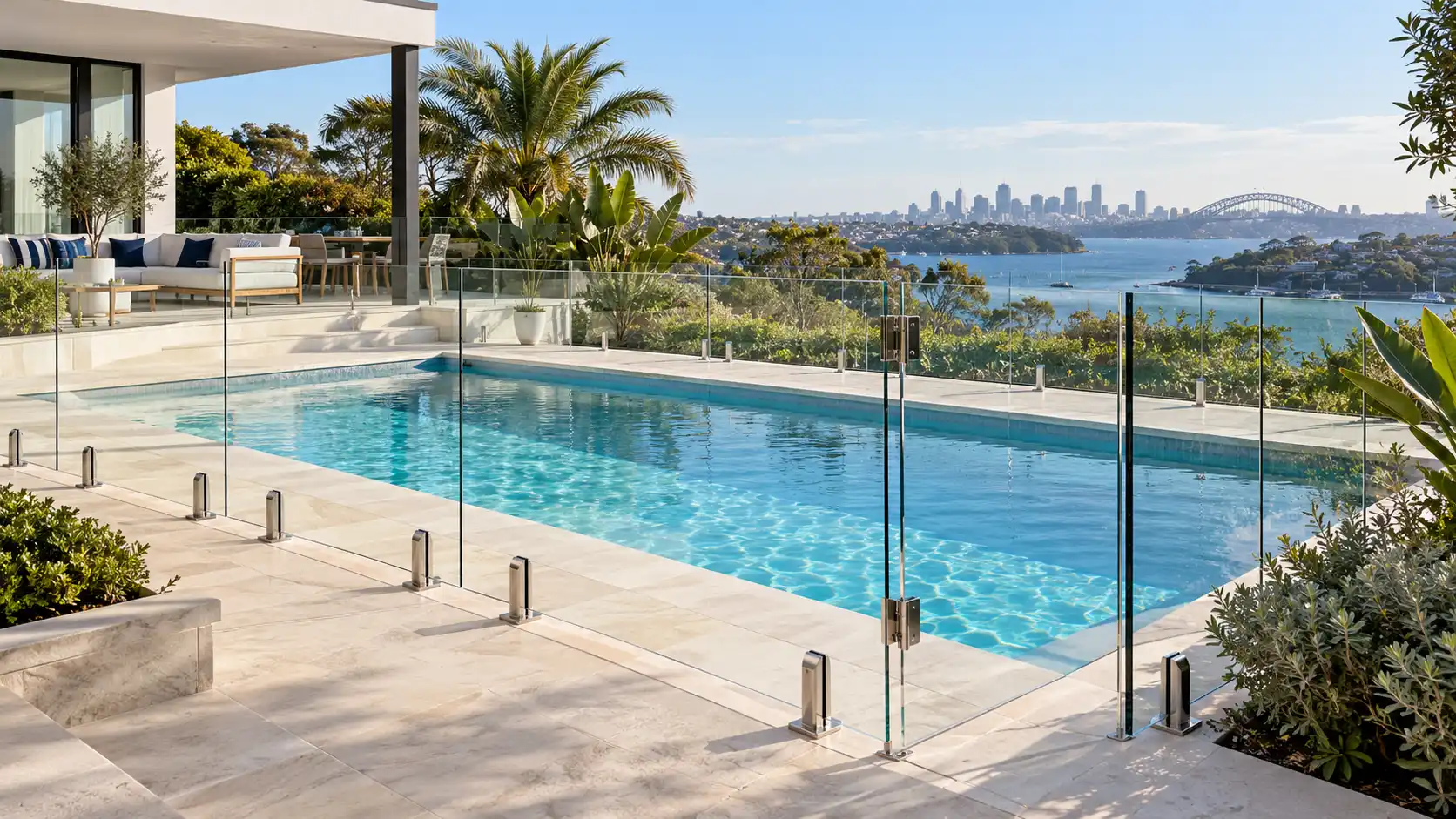
Frameless glass fencing is chosen for a simple reason: it lets the pool remain the centre of the view. Instead of dividing the yard with heavy posts and rails, clear glass creates a secure boundary that feels light, quiet and closely connected to the architecture around it. That visual simplicity is the finished result, but achieving it takes careful decisions about the site, the glass, the hardware and the way every panel meets the paving.
For Sydney homeowners, the best frameless installations are not merely transparent. They make sense for the property. The gate is placed where people naturally approach the pool, the panel line responds to changes in level, and the hardware suits the salt, sun and weather the site receives. This guide explains the practical questions worth considering before requesting a quote or choosing a layout.
What makes a glass fence frameless?
A frameless fence uses toughened glass panels without continuous posts or a top rail. The panels are usually supported at the base by stainless steel spigots fixed into a suitable structural surface. Small gaps between the panels allow them to remain visually separate while creating a continuous barrier around the pool.
The gate is also glass, but it is a moving part rather than a fixed panel. It needs hinges, a latch and correctly prepared support points. A well-adjusted gate should move freely and return to its closed position reliably. Because the hardware is concentrated at the base and around the gate, there is very little to interrupt the view across the yard.
“Frameless” describes the appearance and support method; it does not mean that the glass is floating or that the installation can ignore structure. Each panel carries considerable weight. The substrate, fixing method, spacing and hardware all work together. This is why a site inspection matters even when the proposed fence line looks straightforward in a photograph.
Why homeowners choose it
The strongest design benefit is visibility. Parents can see the pool area from the house or outdoor entertaining space, and the blue of the water remains part of the garden. On a compact block, clear glass can also prevent the fenced area from feeling visually compressed. The boundary is present, but it does not read as a solid wall.
Frameless glass pairs comfortably with many architectural styles. It can sit beside a renovated Federation home without competing with decorative details, or continue the crisp lines of a new contemporary build. Neutral stainless hardware works with stone, concrete, timber and tiled surfaces, so the fence rarely dictates the rest of the palette.
There is also a useful landscape advantage. A solid fence can cast shade or conceal planting, while glass allows light and colour to travel through the space. That does not make every garden maintenance-free, but it helps the pool, planting and house feel like one outdoor composition.
Start with the view, then plan the line
A good layout begins by standing in the places where the pool is seen most often. Look from the kitchen, living room, deck and main garden path. The goal is not simply to draw the shortest possible boundary. The goal is to position panel joints, corners and the gate so they feel deliberate from these everyday viewpoints.
Long straight runs create the calmest appearance, but Sydney yards are rarely perfectly flat or square. Retaining walls, garden beds, steps, drains and existing paving can all influence the route. Sometimes a small change to the fence line produces a much cleaner result and avoids awkward narrow panels. In other cases, the fence needs to step with the landscape rather than fight it.
The gate deserves special attention. It should be easy to reach without encouraging a shortcut through a garden bed or around outdoor furniture. It also needs enough clear space to open, close and latch without being obstructed. A gate that looks centred on a plan may be less practical than one aligned with the normal walking path.
The surface below the glass matters
Frameless panels depend on their fixing points. Stone pavers, tiled slabs, concrete edges and timber decks each present different structural questions. A surface that looks solid at the top may have a thin bed, a void, an edge condition or movement underneath it. Those details affect how the spigots can be fixed and whether additional preparation is required.
Level also matters. A small fall across the paving may be barely noticeable until a straight line of glass is installed above it. The panel tops can be aligned, stepped or adjusted within the limits of the hardware and the site. The best option depends on the amount of fall and which line will look most natural from the house.
Discuss the fence before new paving is completed whenever possible. Coordination gives the landscaper, concreter and fence installer a chance to provide suitable structure in the right places. It can also keep drains, control joints and decorative borders away from critical fixing locations. Planning early is usually easier than adapting a finished surface later.
Choosing glass and hardware
Pool fencing glass is a specialist building product, not ordinary window glass. Its thickness, processing and use need to suit the application and the selected hardware system. The panel sizes should also be planned for the actual route into the yard. A large panel is not useful if it cannot pass safely beside the house, around a corner or down a flight of steps.
Hardware affects both appearance and long-term care. Polished or brushed stainless steel is common, while some projects use dark finishes to connect the spigots and fittings with window frames or other metalwork. Coastal and harbourside properties deserve particular attention because airborne salt can settle on exposed metal. A suitable grade and a sensible cleaning routine are important parts of the specification.
Small details become visible in a minimal design. Consistent panel gaps, aligned spigots, neat silicone work where it is required and carefully positioned gate hardware make the difference between a fence that merely disappears and one that feels resolved. Ask to see how the proposed hardware will look from both sides of the gate, not only from the most flattering angle.
Gate performance is central to the project
The gate is the part of the fence that people touch every day. It is also the part most affected by alignment, movement and adjustment. Hinges need the correct support, the latch needs to meet cleanly, and the gate should not drag or strike adjoining glass. Even a beautifully aligned row of fixed panels will not compensate for a poorly performing gate.
Think about how children, guests and people carrying towels will approach it. A clear, intuitive entry point is easier to use properly. Avoid placing furniture, pot plants or other objects where they can interfere with the gate or change the space around the barrier. After installation, keep an eye on closing action and arrange an adjustment if it changes rather than accepting unreliable operation.
Pool barrier requirements can vary with the property and the approval pathway. Your installer can explain the intended layout, but the relevant council or an appropriately qualified certifier should confirm what applies to your site. Treat compliance as a design input from the beginning rather than a final check after the glass has been ordered.
What frameless glass costs
Frameless glass generally sits toward the premium end of pool fencing options. The material is only one part of the figure. Panel sizes, number of corners, gate configuration, access, fixing conditions and changes in level can all affect the work. A short fence with difficult structural preparation may cost more per metre than a longer, open run on a suitable slab.
Quotes are easiest to compare when the scope is clear. Check whether demolition, disposal, core drilling, concrete preparation, patching, special panels, gate hardware and final adjustment are included. Confirm the proposed glass and hardware rather than comparing only the total. Two fences can look similar in a small sample while using different components and installation methods.
A site measure is more useful than a price guessed from a photograph. It allows the installer to check access, levels, corners and the condition below the proposed spigots. It also gives you a chance to discuss alternative lines. A small change in layout can sometimes simplify the job without sacrificing the view you wanted.
Cleaning and ongoing care
Glass makes water marks, dust and salt more visible than an opaque fence. Regular light cleaning is usually easier than waiting for a heavy build-up. Rinse loose material first, use a suitable glass-cleaning method and dry the surface with clean tools. Avoid harsh or abrasive products that can damage coatings, metal finishes or surrounding stone.
Metal fittings also benefit from routine fresh-water rinsing, particularly near the coast. Do not assume that stainless steel means “no care.” Tea staining and surface contamination are easier to manage early. Follow the hardware supplier’s recommendations and take care not to leave cleaning chemicals trapped around fixings.
Periodically look over the gate, latch and panel line. Check that the gate continues to close freely and that no landscaping or movable object has encroached on the barrier. If something appears loose, misaligned or damaged, ask a qualified professional to assess it. Glass panels and gate mechanisms are not the place for improvised adjustments.
Is frameless glass right for your pool?
It is an excellent fit when the outlook matters, the pool is a major visual feature and the site can support the required fixing method. It also suits homeowners who are comfortable with visible water marks and the modest cleaning needed to keep the glass looking its best.
It may be less compelling where privacy is the main priority, where the fence line is hidden from the house, or where the available budget would be better invested in broader landscaping work. Aluminium or framed glass can provide a strong result in those situations. The best choice is the one that balances view, structure, maintenance and cost for the actual property.
If you are considering frameless glass pool fencing, arrange an on-site measure before settling on the final line. Pool Fencing Sydney can review the paving, access and levels, explain suitable hardware options and prepare a quote around the way your family uses the yard.